NHS BIM support for estates and capital projects
NHS BIM requirements that work for your estate
Give every project a clear information brief
Project teams can only provide the right information when the Trust has clearly defined what “right” looks like.
Lynefield helps NHS estates and capital teams create practical client BIM documents, including Organisational Information Requirements, Asset Information Requirements and Exchange Information Requirements.
These documents set clear expectations for models, drawings, documents and asset data, so the information created during a project continues to support the estate long after handover.

Put the estate at the centre of every project
Every capital project produces a large amount of information. Its value depends on how well it supports the people responsible for operating, maintaining and improving the estate.
Clear client BIM requirements give project teams direction from the outset. They explain what information is needed, when it is required, how it should be delivered and how it will support your systems and operational processes.
This creates a more consistent approach across projects and gives estates teams a stronger position throughout delivery.
The documents that give project teams direction
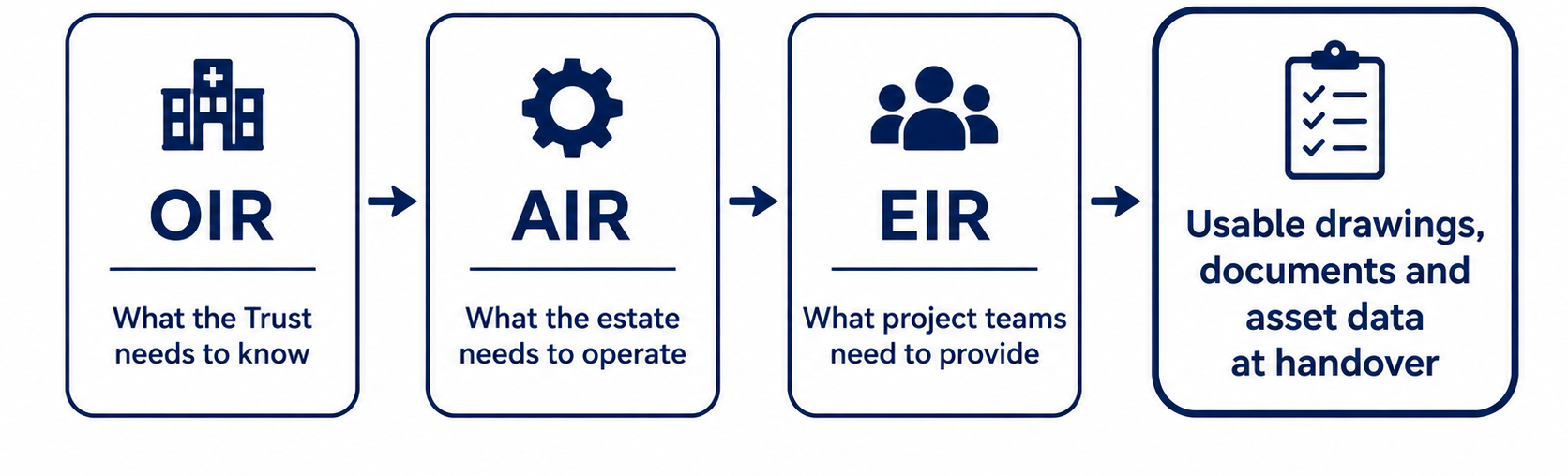
We help NHS Trusts create a connected set of client BIM documents, shaped around the way their estate is managed.
Organisational information requirements
Your Organisational Information Requirements set the wider information outcomes for the Trust.
They identify the information needed to manage the estate, support investment decisions and build a clearer picture of buildings, assets and performance over time.
Asset information requirements
Your Asset Information Requirements define the information needed once a building is in use.
They help establish the drawings, documents, models and asset data needed to support maintenance, compliance, asset management and estate records.
Exchange information requirements
Your Exchange Information Requirements tell project teams what they need to provide at each stage of delivery.
They set clear expectations for information formats, delivery milestones, model outputs, documentation and structured asset data, giving the project team a practical route to follow.
Requirements built around how your Trust works
Useful client BIM documents reflect the systems, processes and priorities already in place across the estate.
We work with NHS teams to understand the information that matters most, including CAFM requirements, asset data fields, naming conventions, classifications, drawings, documents and handover processes.
The result is a set of requirements that project teams can understand and estates teams can use.
Better requirements lead to better handover
Clear information requirements help you:
- Give project teams a consistent brief
- Set handover expectations from the start
- Improve the quality of drawings, documents and asset data
- Align project information with CAFM and asset management systems
- Reduce the effort needed to sort, check and correct information at project close
- Build a more reliable estate record over time
Support during project delivery, where it is needed
Once requirements are in place, we can also provide targeted support during project delivery.
This may include reviewing BIM documentation, information delivery plans and handover outputs, helping keep the client position clear and giving teams time to resolve issues before completion.
- Keep information requirements visible during project delivery
- Review handover information before completion
- Provide client-side oversight before issues become handover problems
- Help estates and project teams resolve issues early